Cheil textile museum & Samsung foundation building
Cheil Industries
2016 / museum & memorial / Daegu-South Korea
design concept by Cheil Germany
summary
Heritage and memory
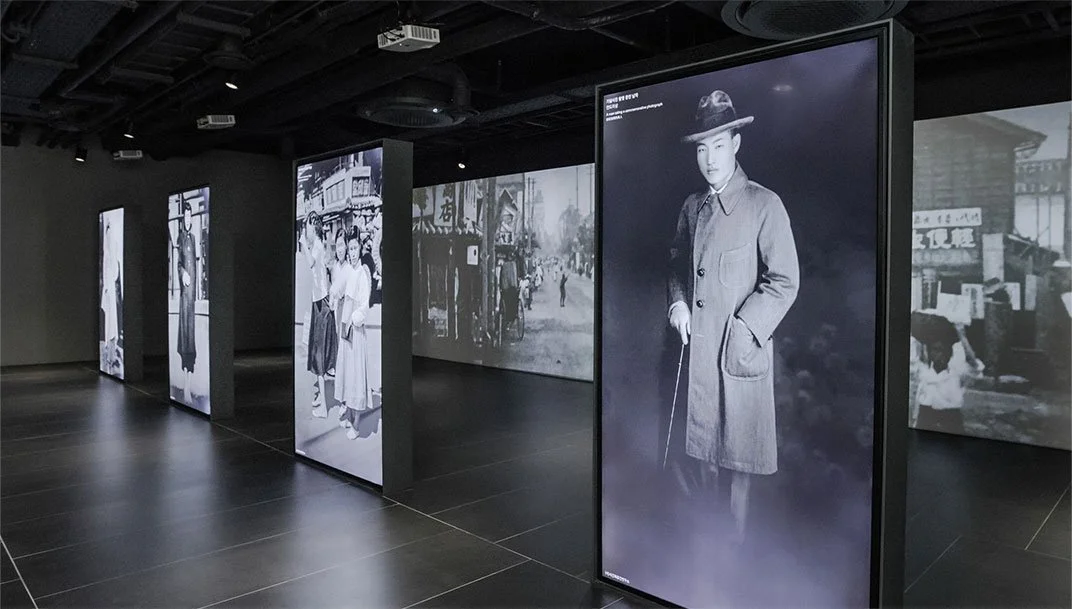
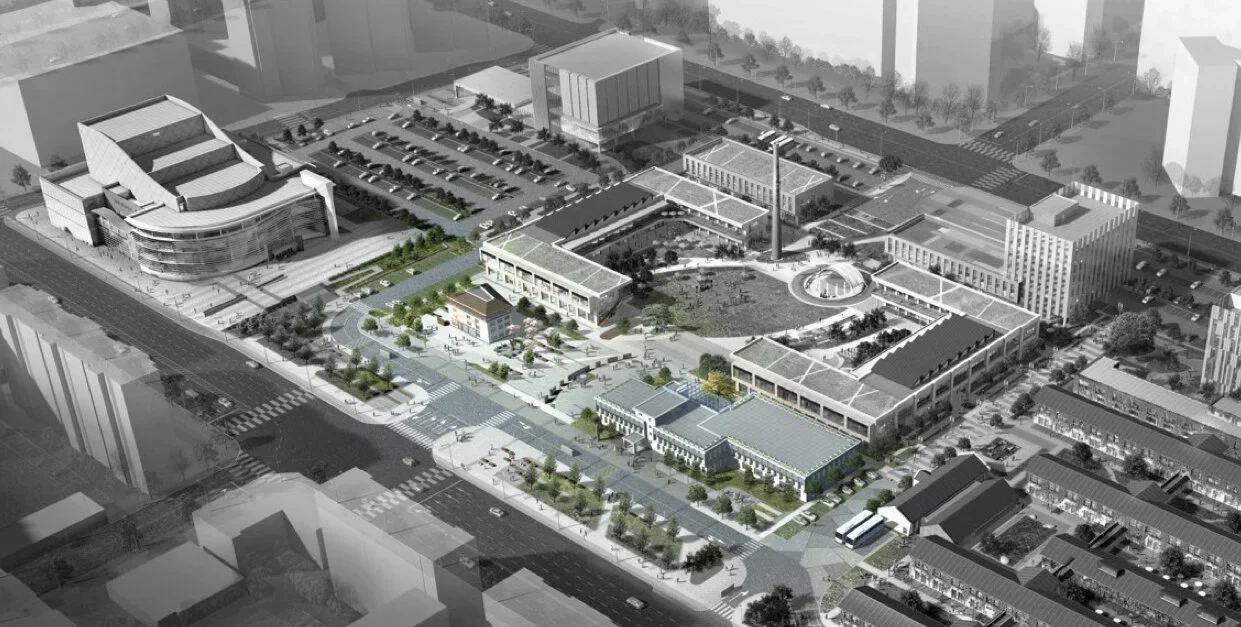
Part of a larger development in the city of Daegu , 2 of the first buildings defining the Samsung evolution are up for refurbishment and transformation into spaces that honor and celebrate the legacy of the Samsung founder as well as his part into reshaping the evolution and economy of South Korea.
Samsung Foundation Building
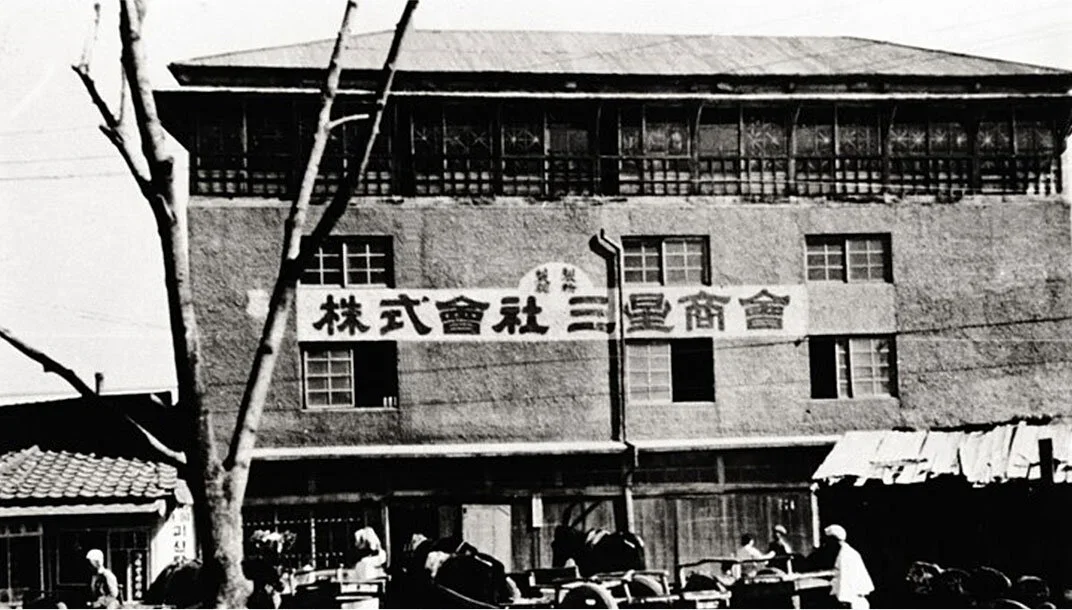
The foundation building is the place where Samsung Sanghoe , a trading company selling dried fish, noodles and locally grown groceries was established by the Samsung founder Lee Byung-chul in 1938. It serves as to starting point for the Samsung story, long before the electronics business started and caries the legacy of its founder
Cheil Wool Textile Memorial Museum
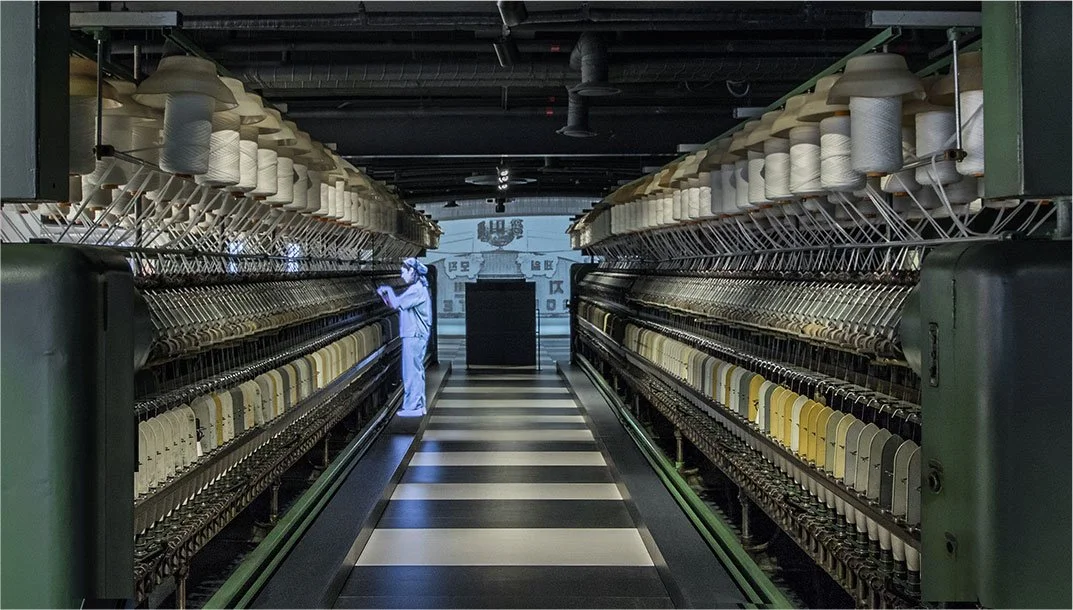
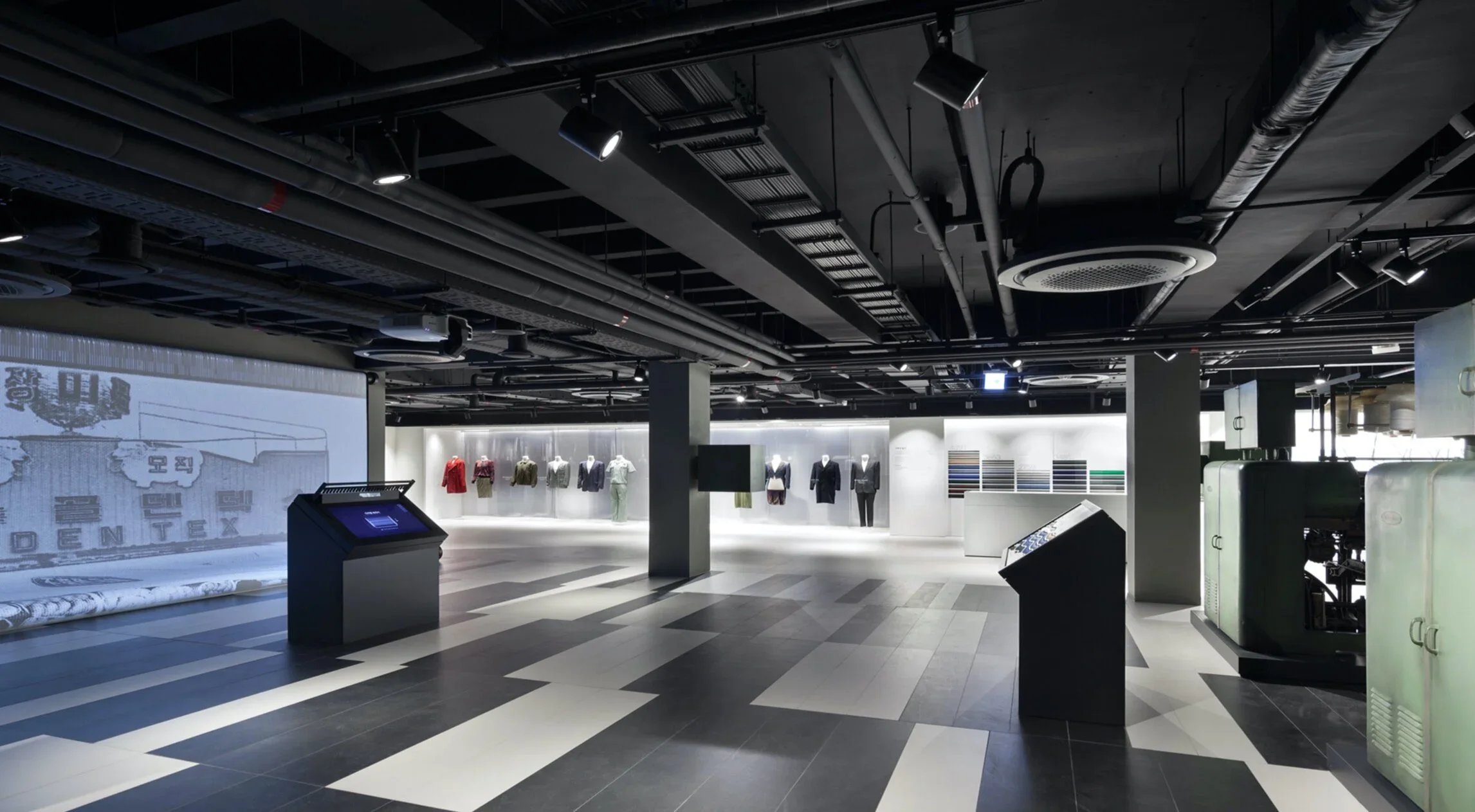
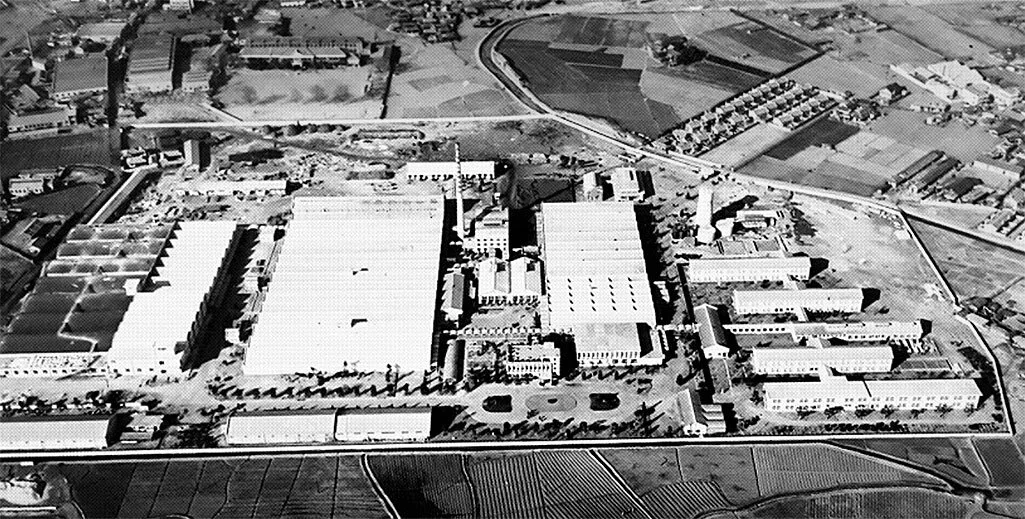
The second building to be refurbished inside the complex was the Cheil Woolen Fabrics building, a 1954 business also created by the Samsung founder that evolved and later transformed into the larger conglomerate Cheil Industries.
core idea
A progressing Idea
Designing an exhibition within a historical building presents a unique challenge: the new and the existing must coexist in thoughtful harmony.
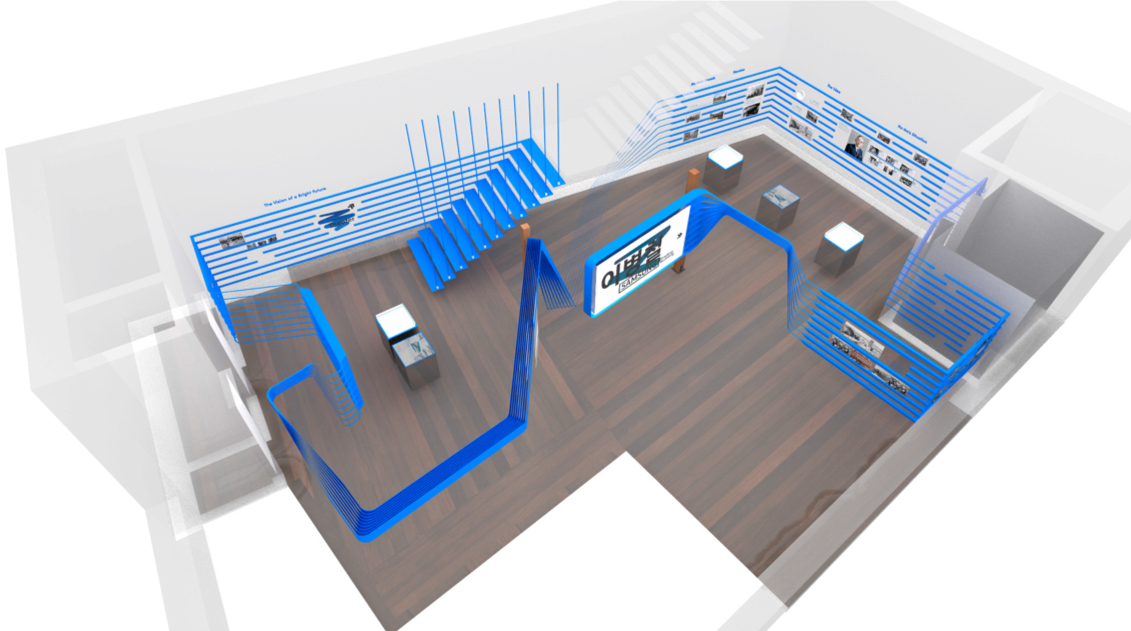
Our solution was a continuous exhibition journey—a “path of ideas”—that respects the architectural context while offering fresh perspectives to narrate the story of the Samsung Trading Company within its authentic environment.

IDEA as a starting point
One idea leads to the other. They start forming PATHS and becoming the foundation of something greater.
The ideas are elevated and INTERWOVEN with each other
From darkness to brightness. Refining people‘s lives.
key steps
The starting point
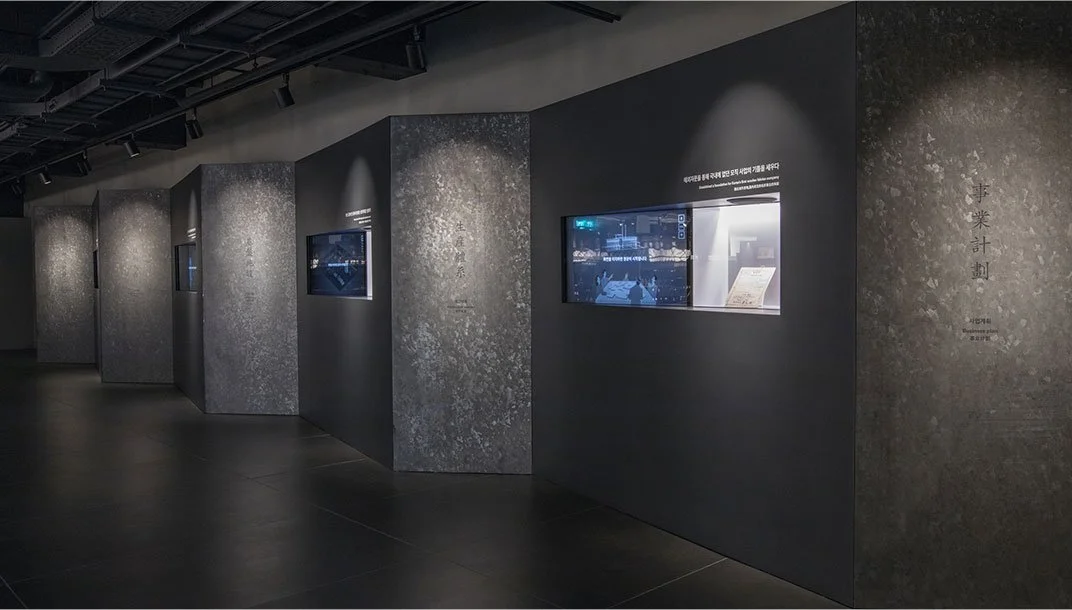
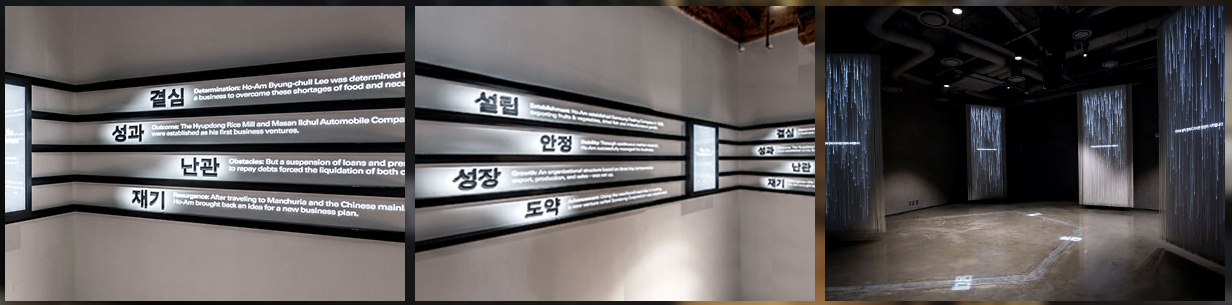
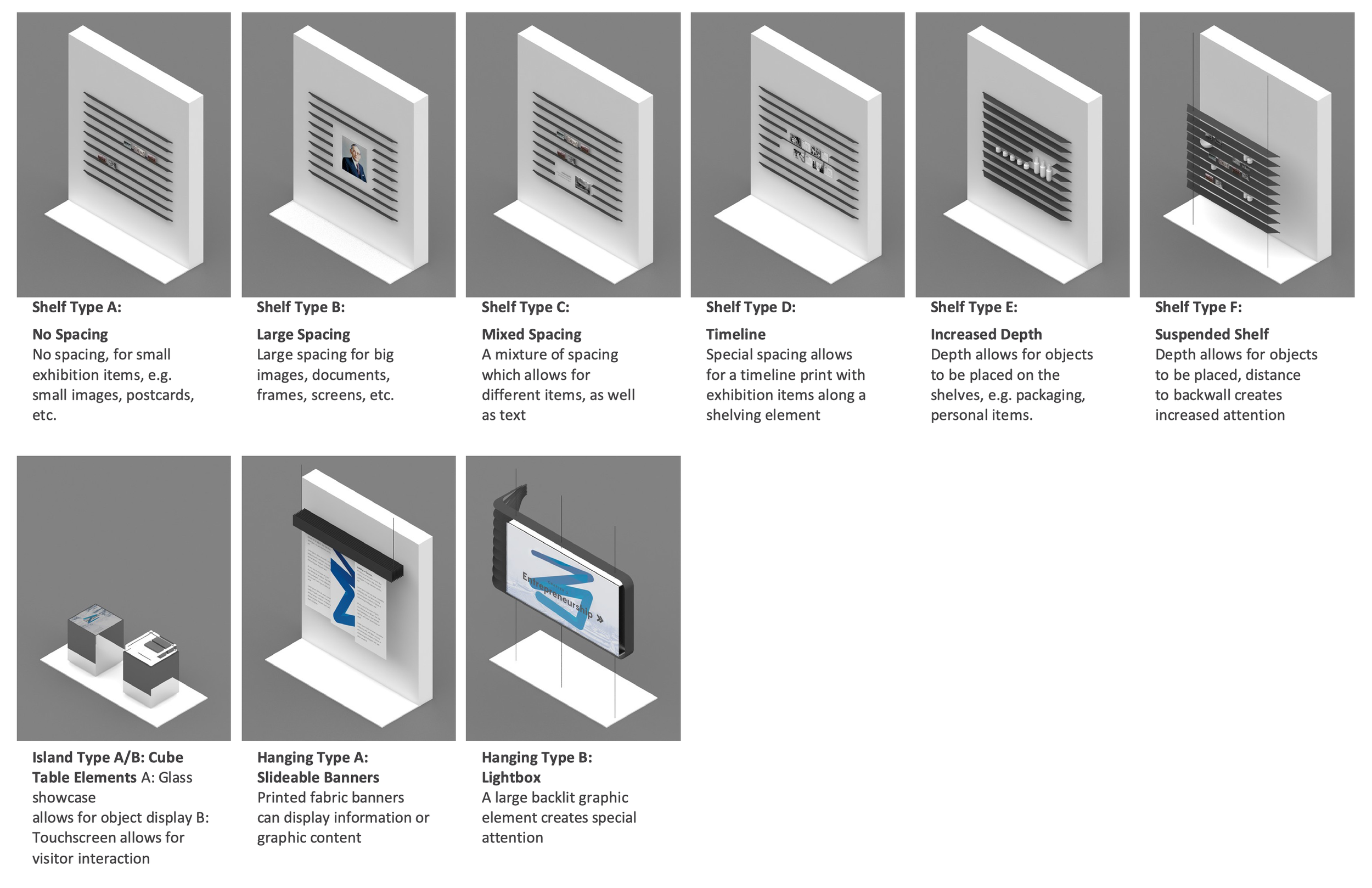
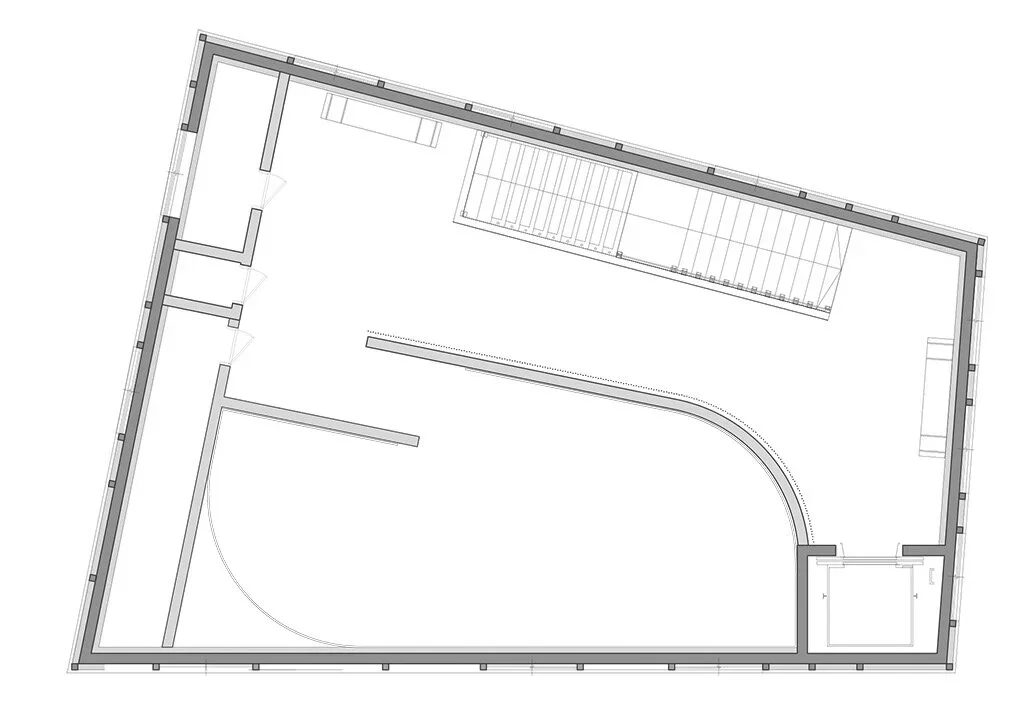
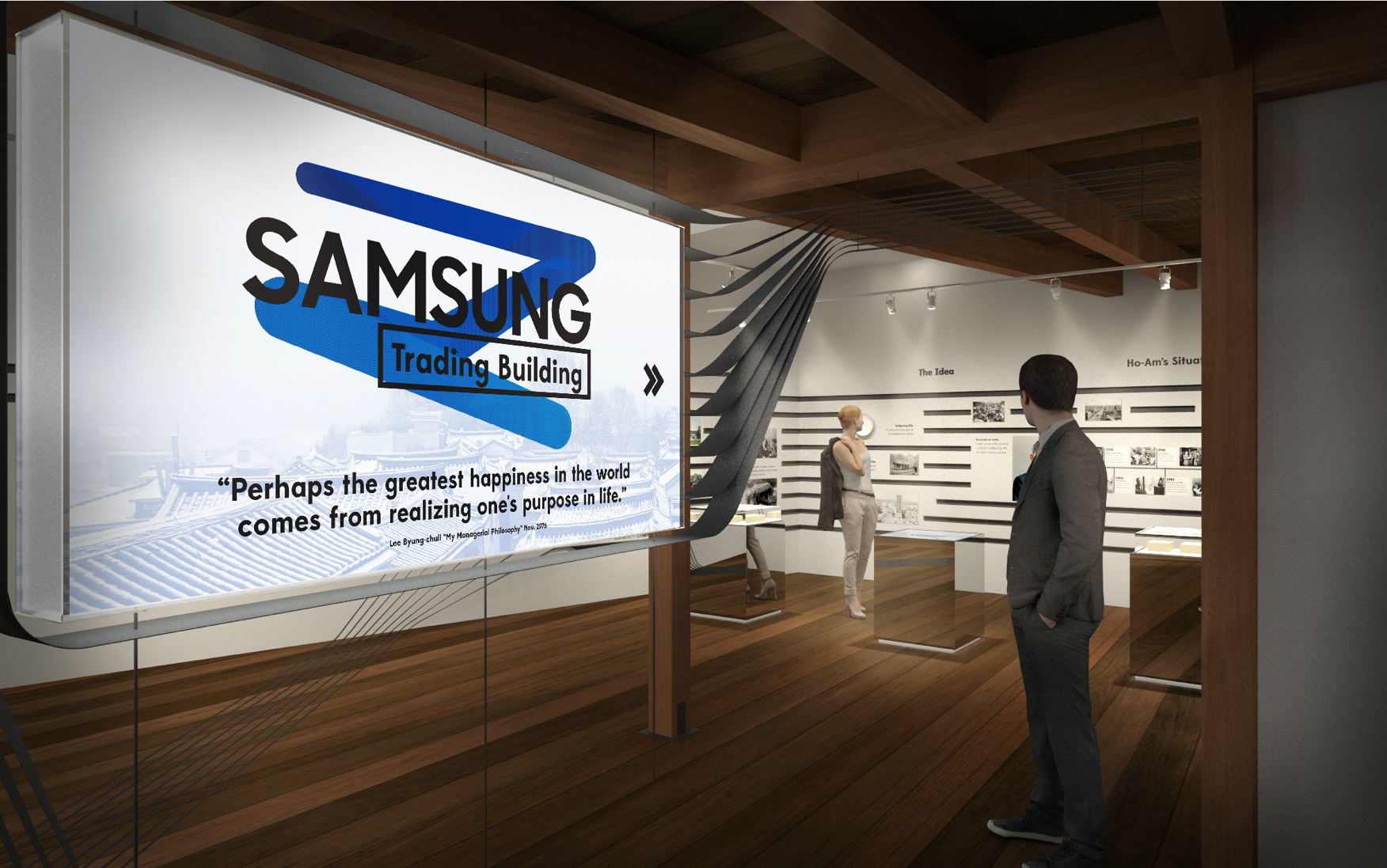
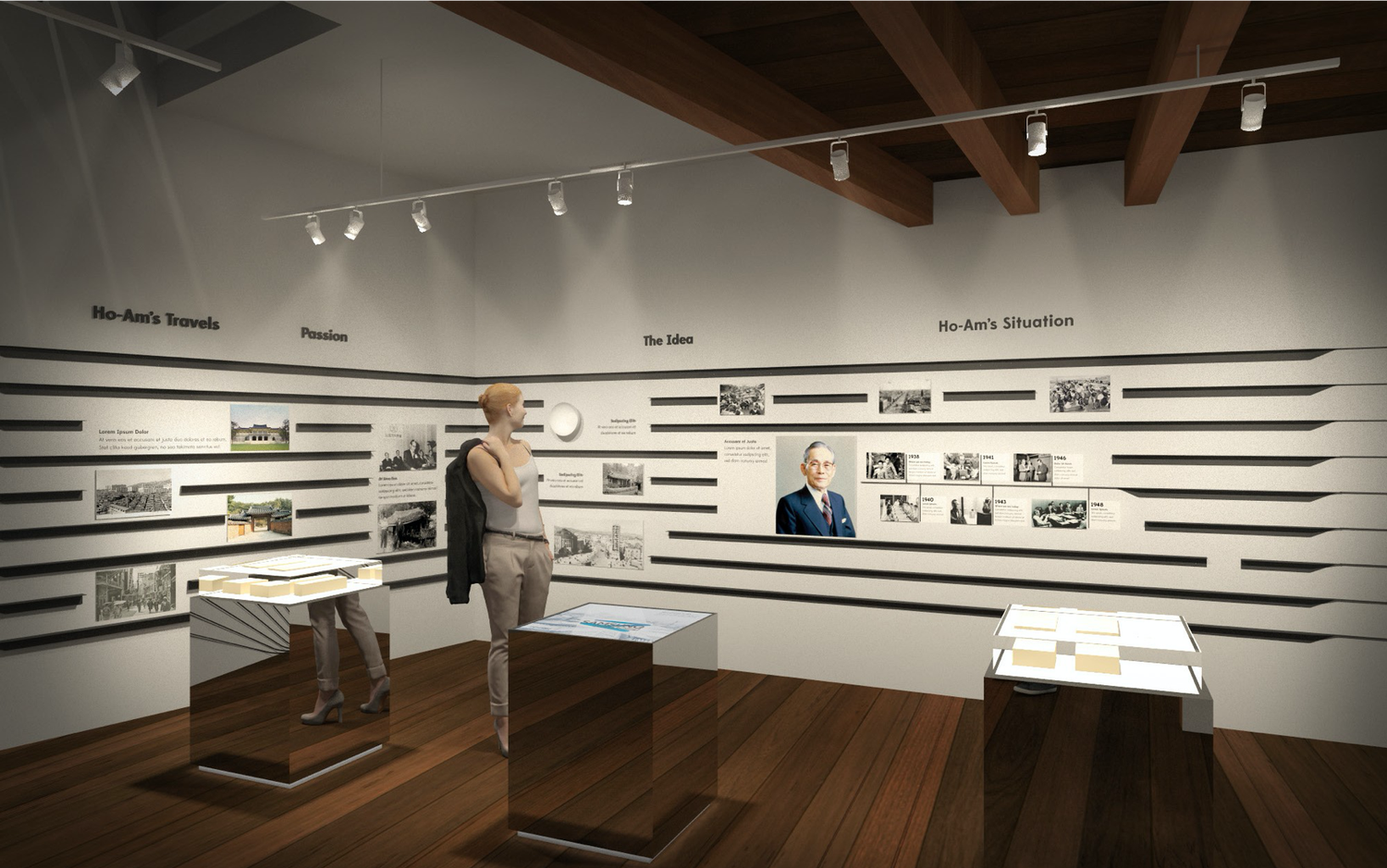
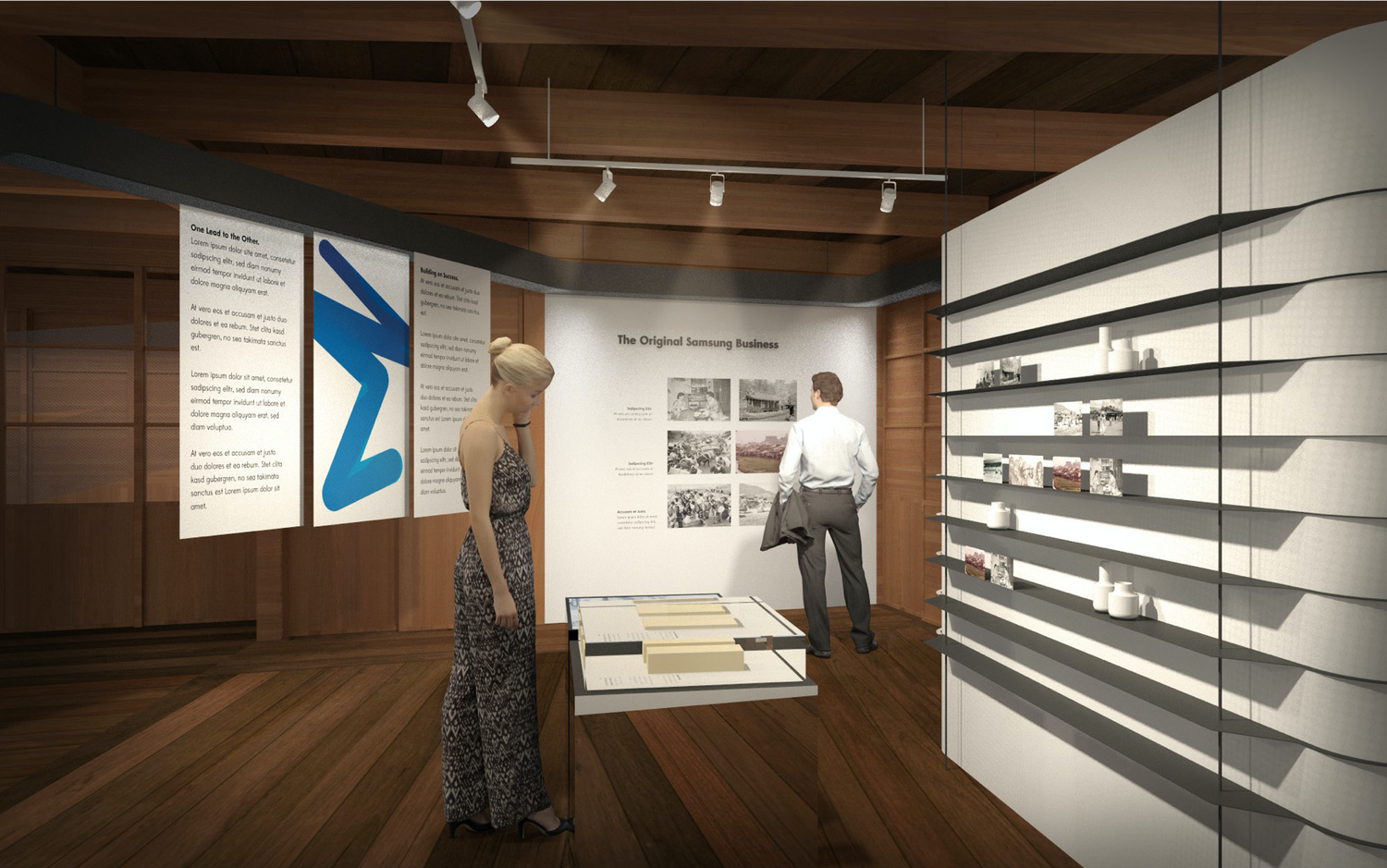
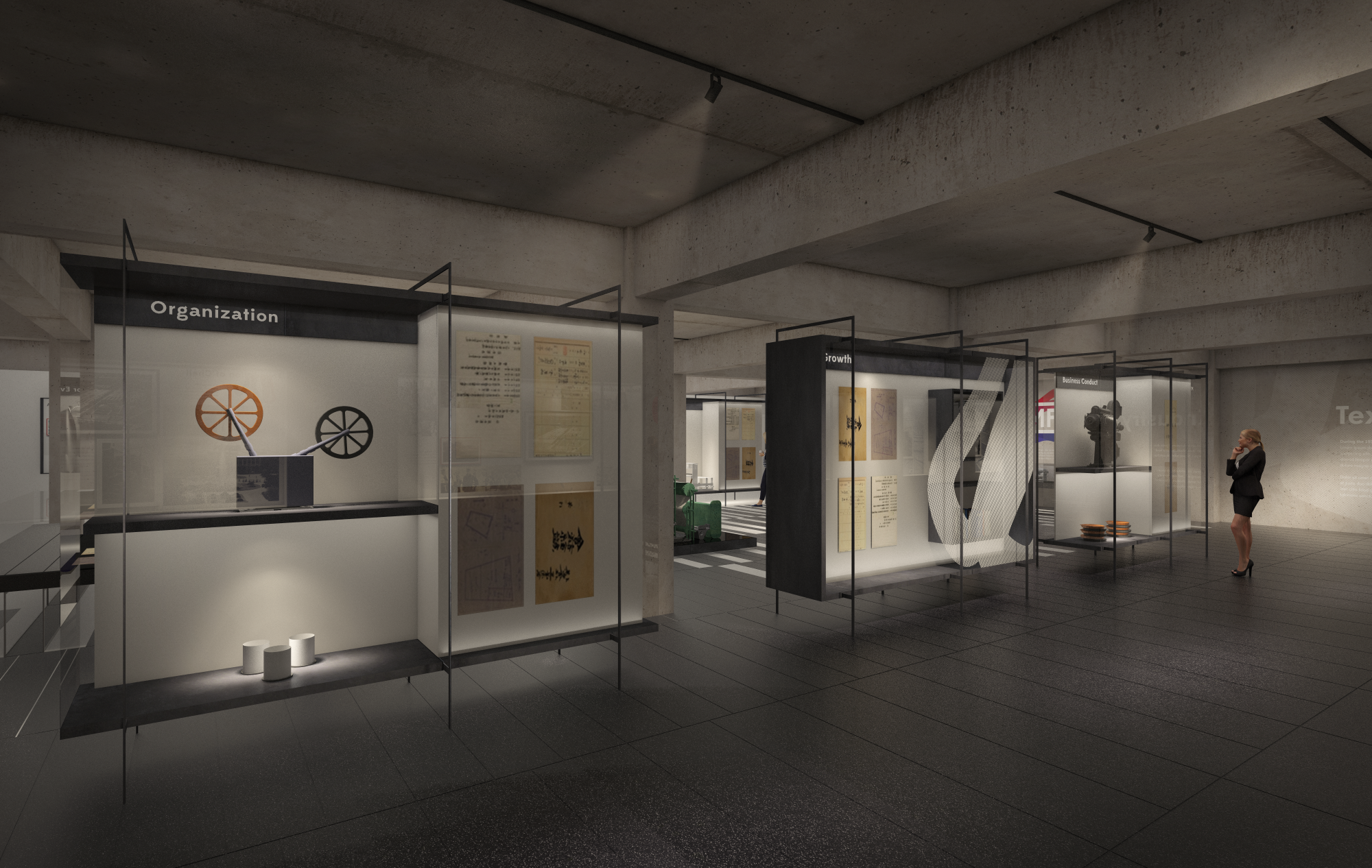
The memorial building was rebuilt to its original shape and the interior was dedicated to preserving some of the elements of the first office and the character of the initial building. However, for the welcome area the intention was to create a continuous string that undulates within the space, pointing to some of the key moments of the evolution of the business and the ideas that led to its prosperity.
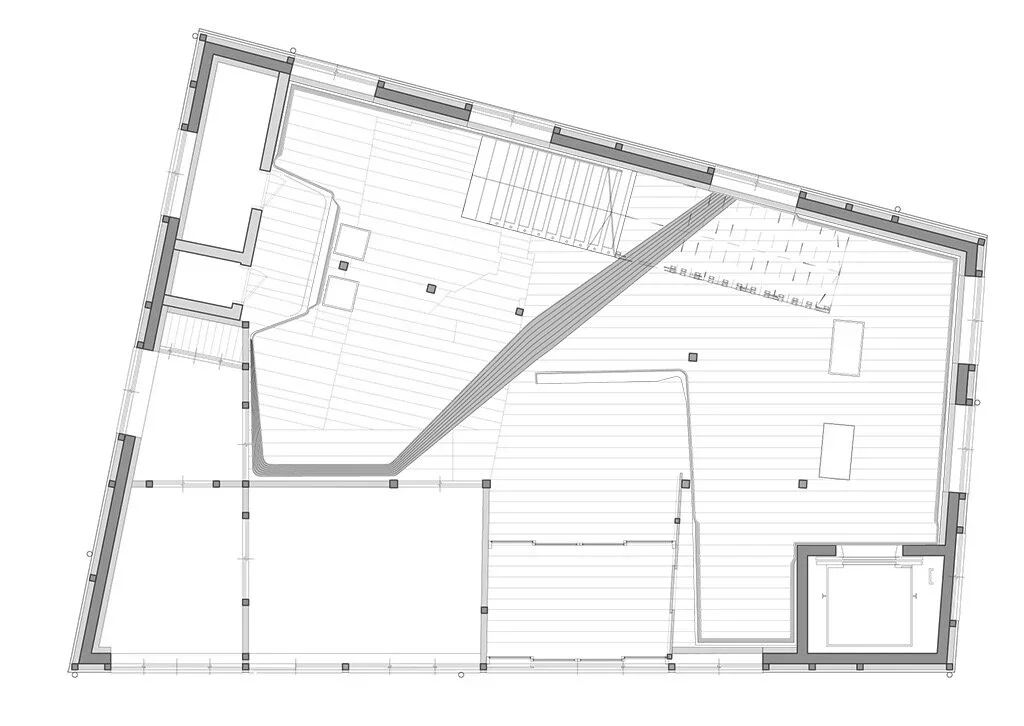
While the ground floor hosted the main exhibitions and memorabilia , the upper floor was dedicated to the display video contents and a more immersive experience.
Ground floor exhibition
First floor theater
key steps
An evolving Pattern
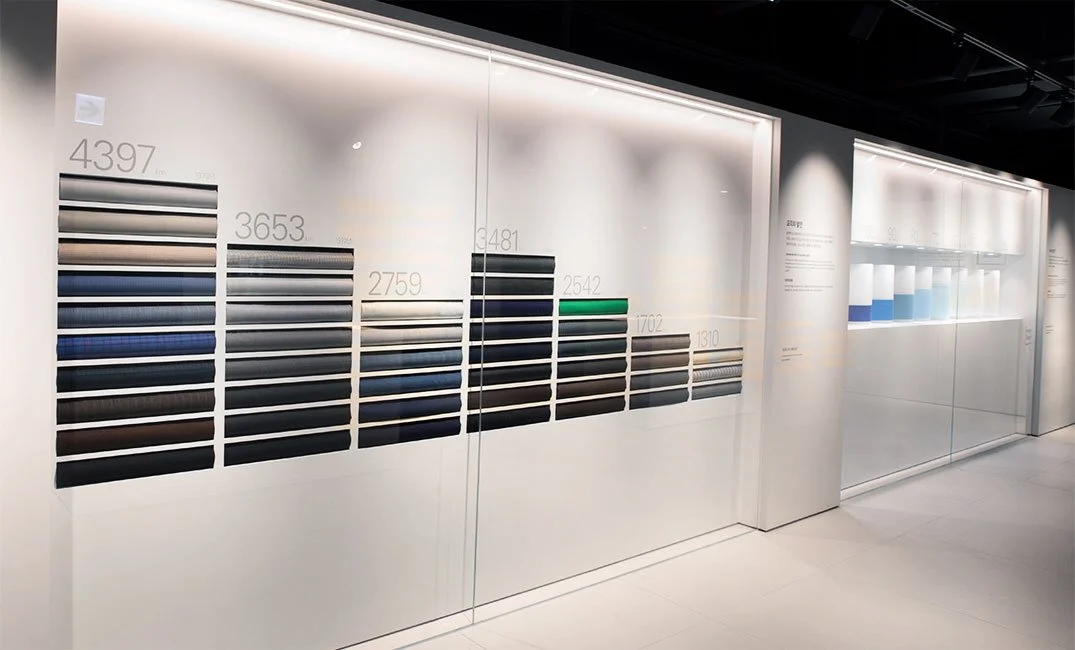
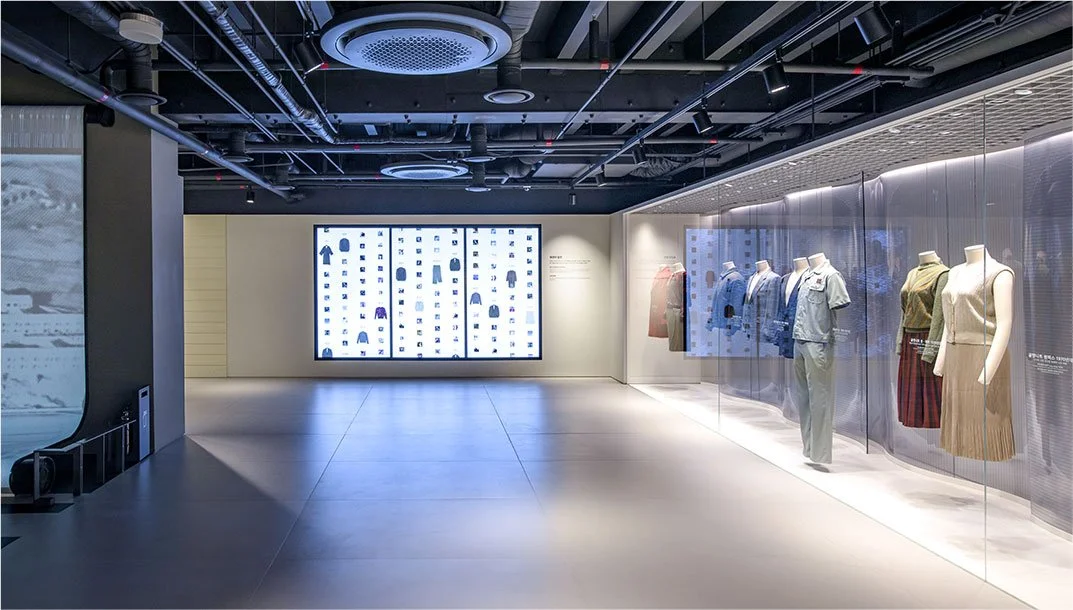
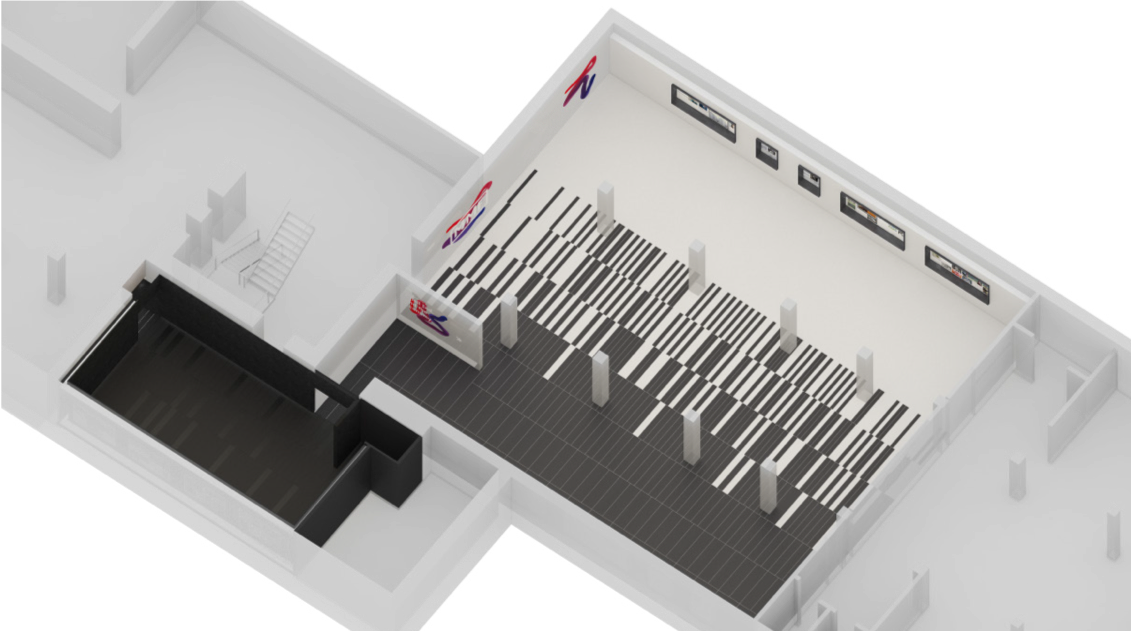
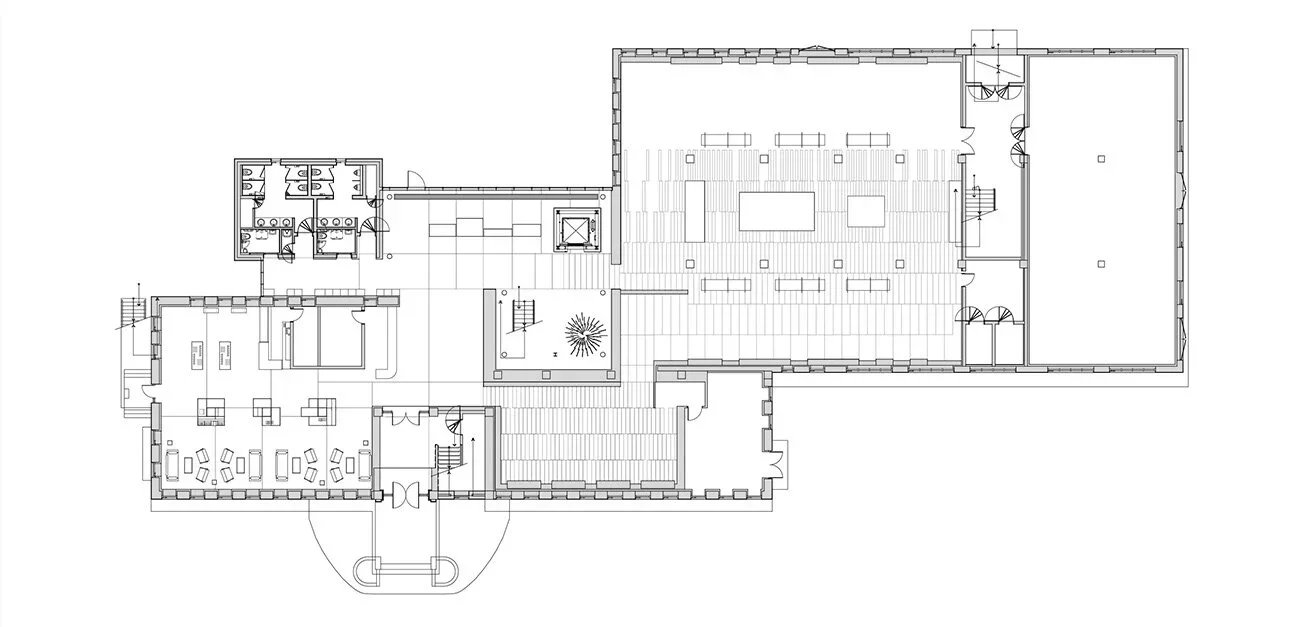
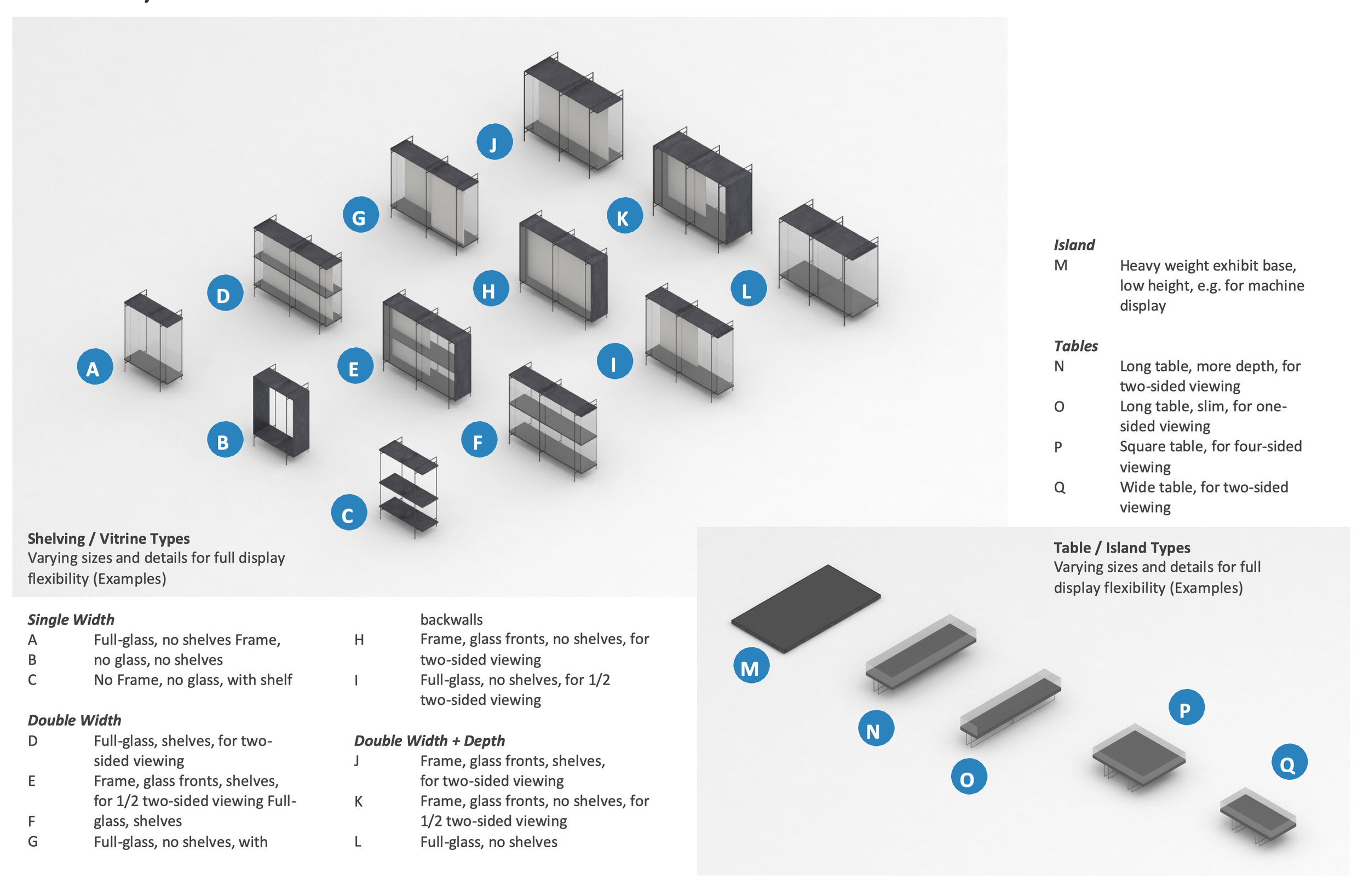
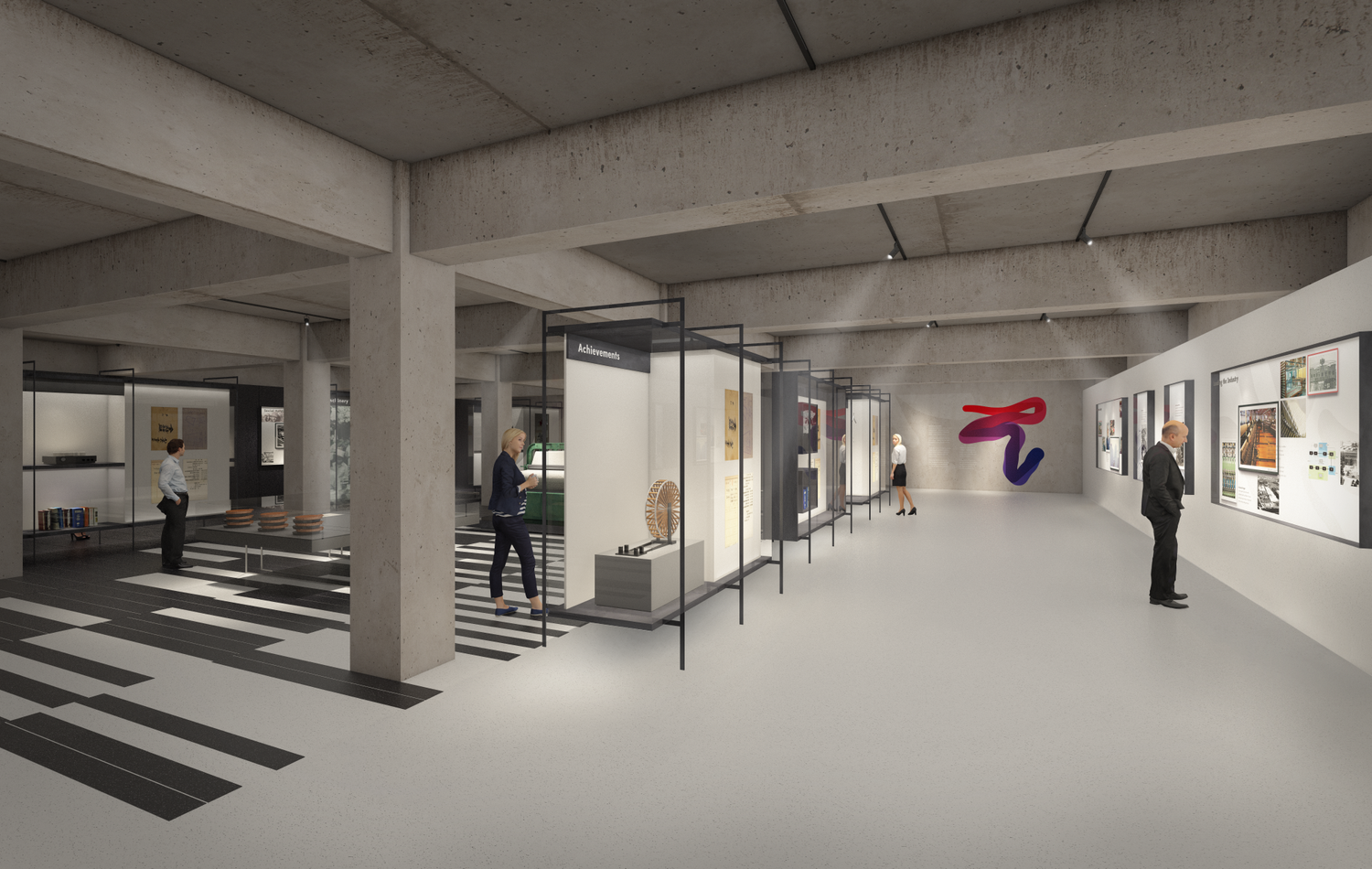
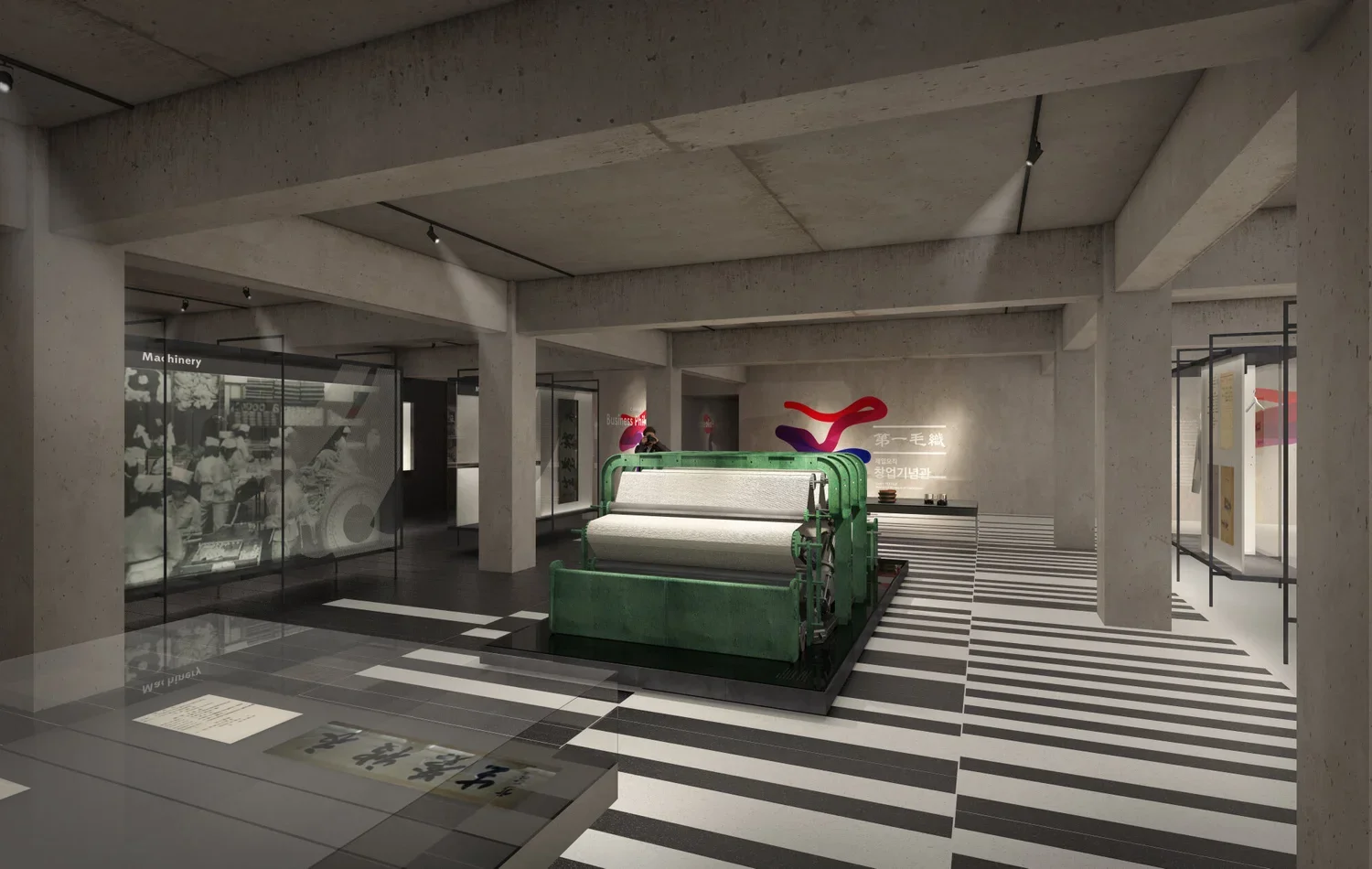
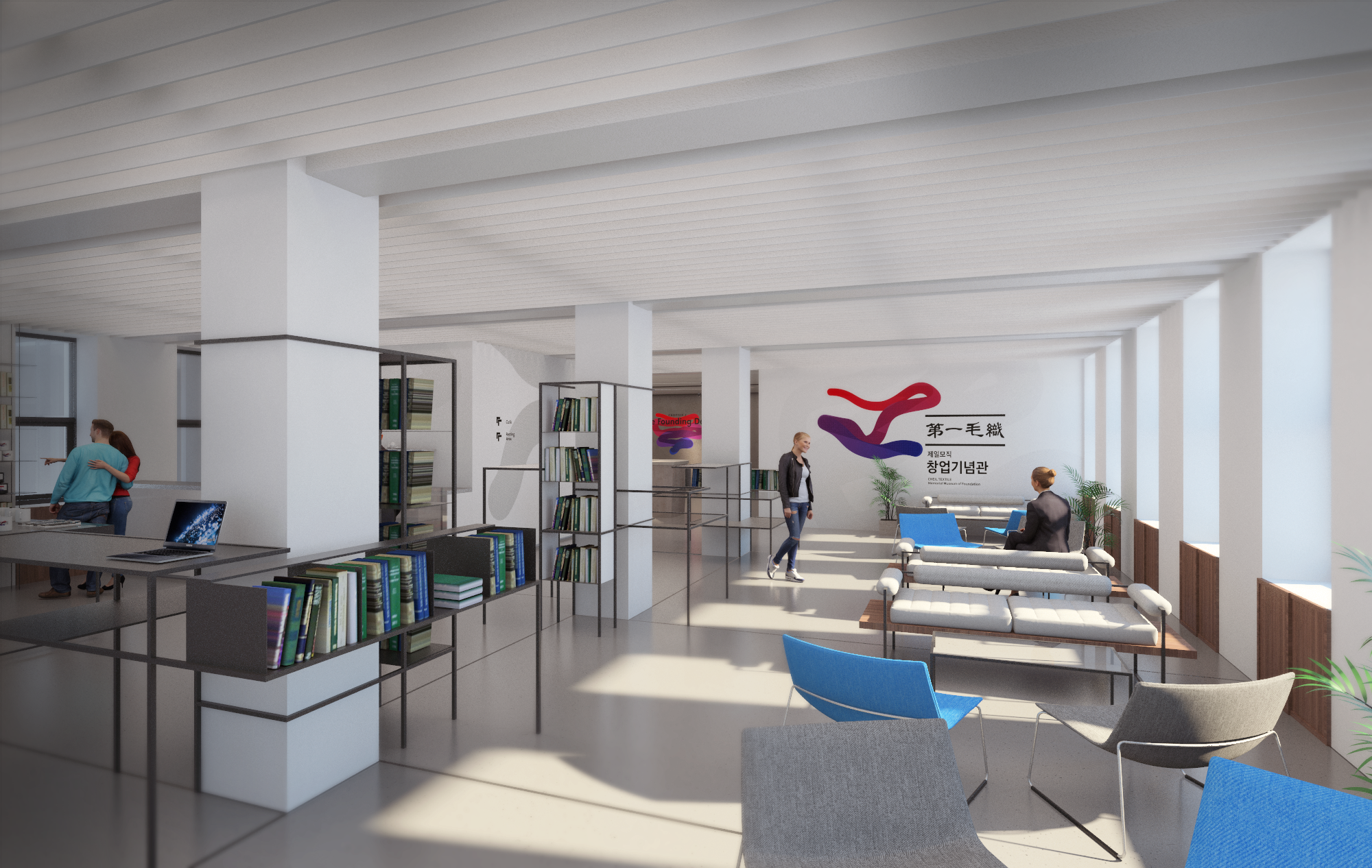
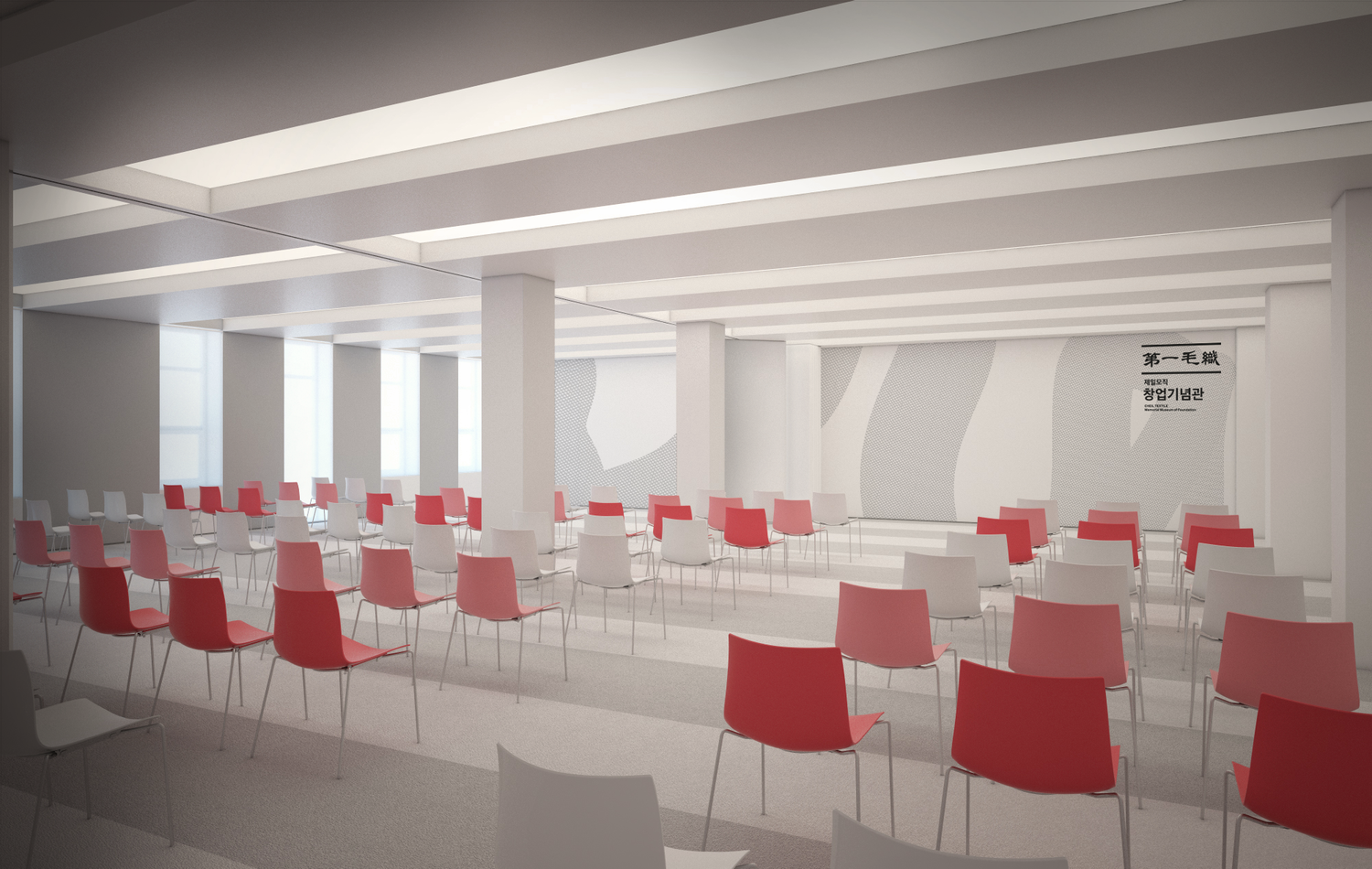
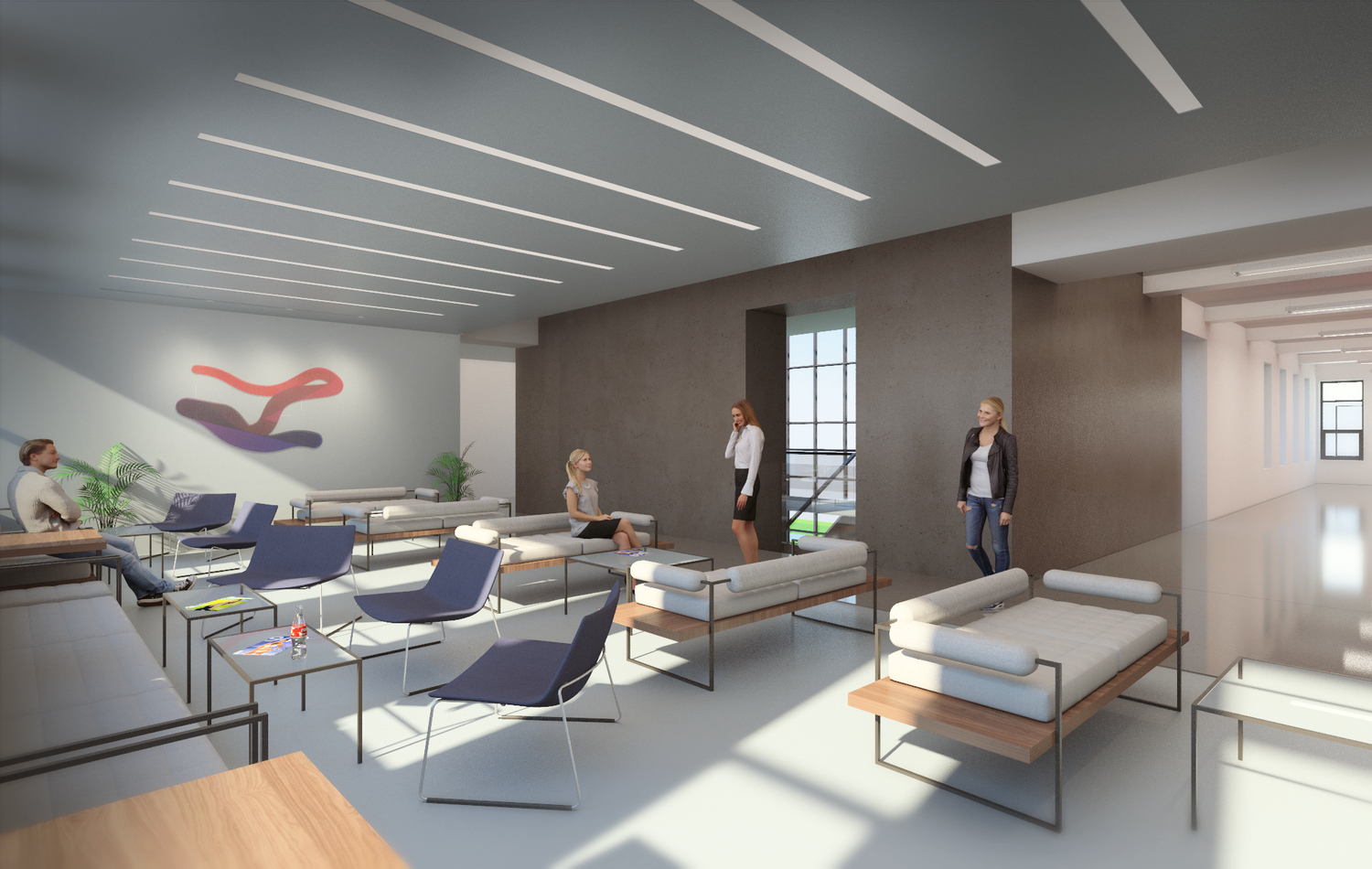
For the Wool and Textile Museum, we extended the concept by interpreting the visual language of strings into a dynamic pattern that reflects the brand’s and Korea’s journey toward a brighter future. In addition to the exhibition, the renovation included a retail shop and a compact conference space, both featuring furnishing and detailing that adopt a fine, lightweight character inspired by the subtle structure of textiles.
Ground floor
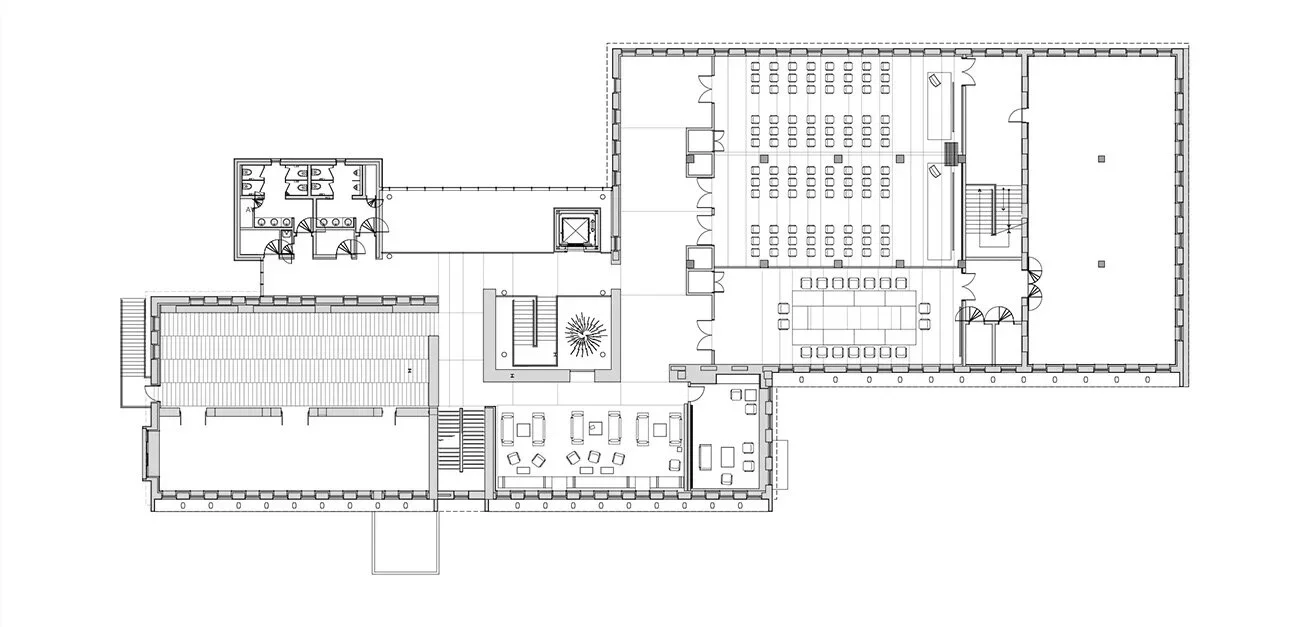
First floor
my role
As a designer my main task was to develop the Hoam foundation building exhibition, parts of the second exhibition .For the second exhibition space I was in charge of the retail zone and the conference space. After the concept phase the project was handed to local architects for further development and implementation.
outcome